Businesses Stepping up for Democracy: Ep. 1
Bravery in Modern Times
The Story of One Small Business in Minneapolis
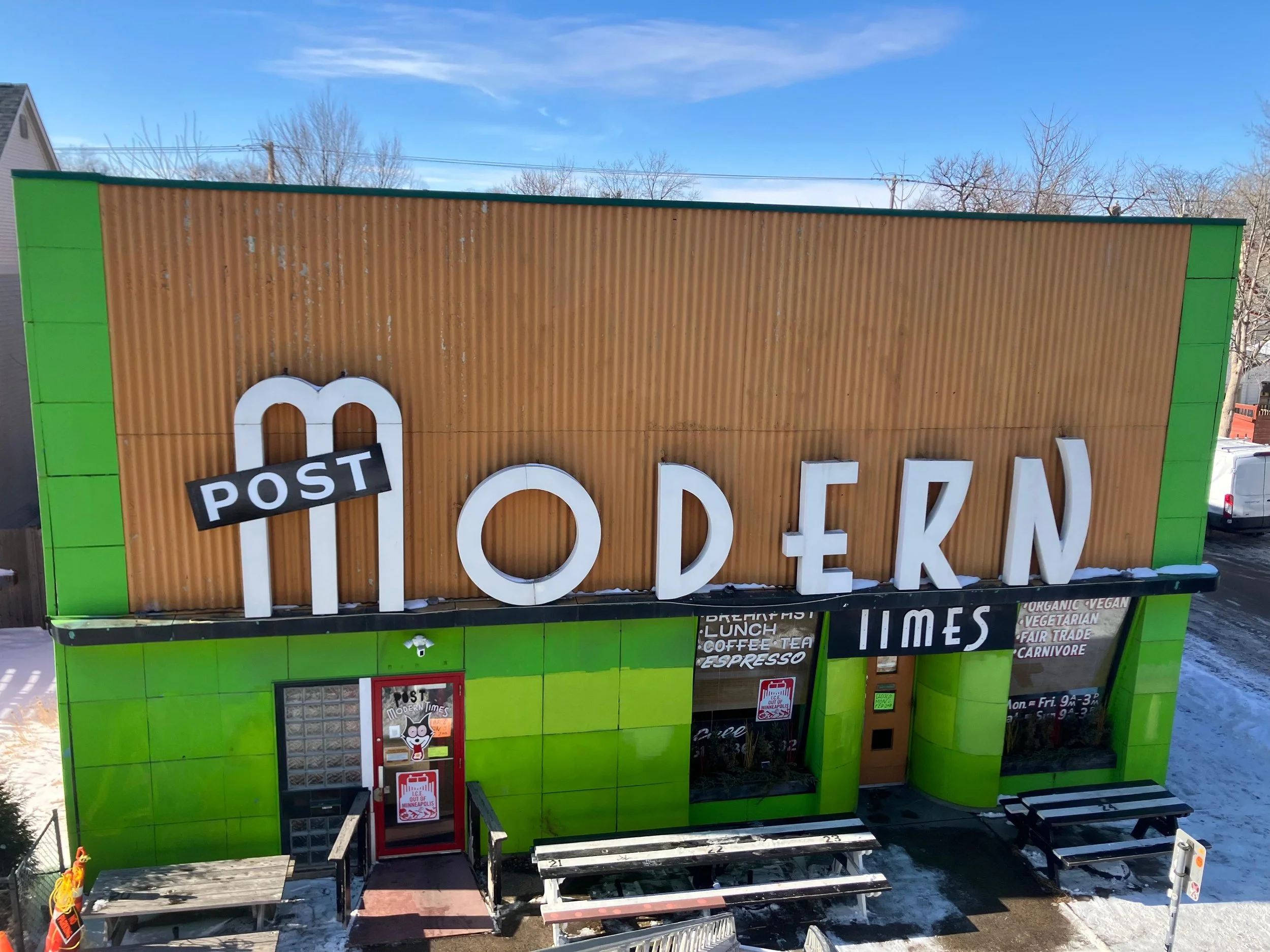
Dylan Alverson opened Modern Times Cafe with two colleagues fifteen years ago.
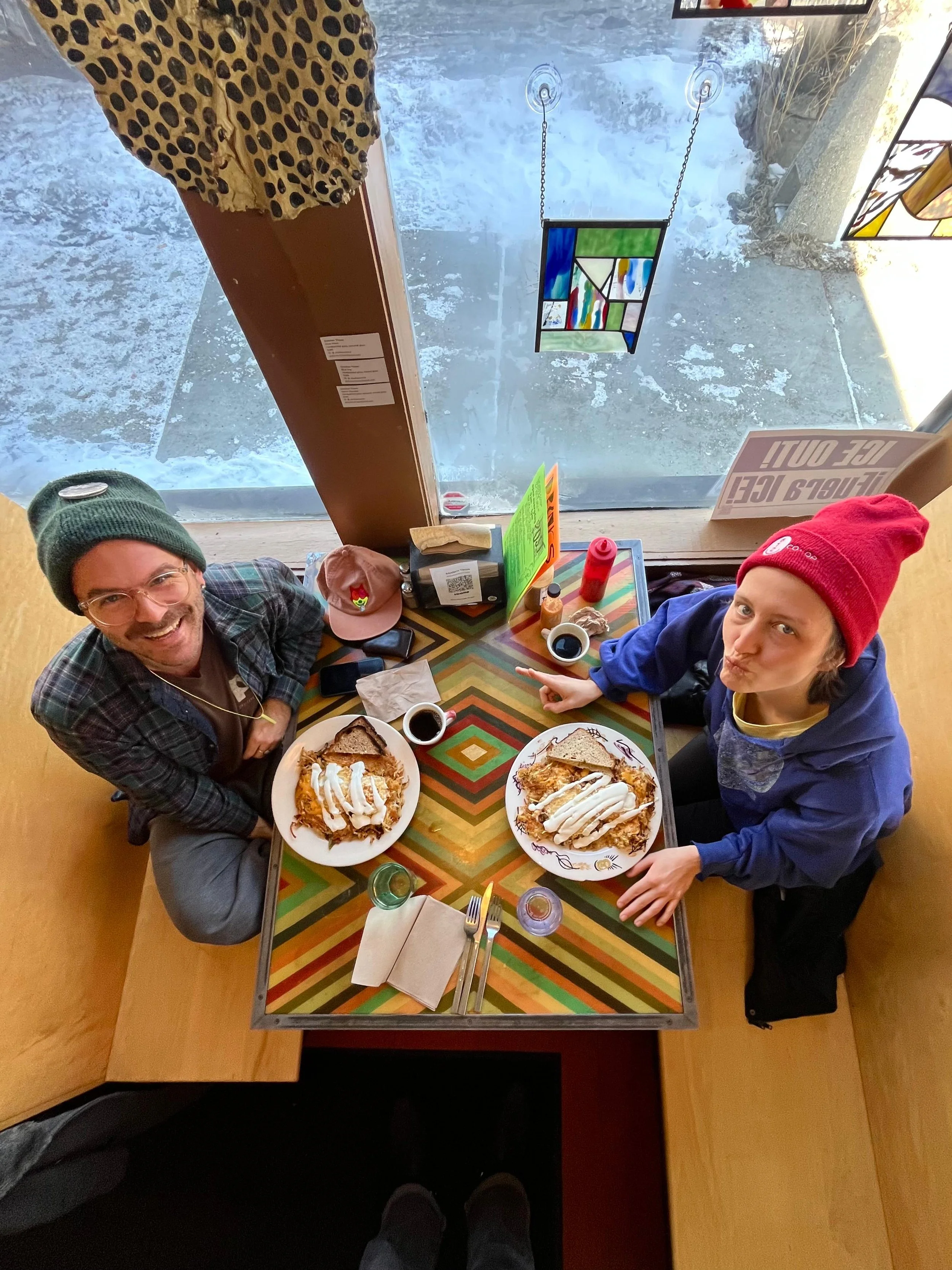
A pillar of the Central neighborhood in Minneapolis, the cafe reflects the ethos that Dylan and his team have had from the start: To be of and for the neighborhood. They designed the Cafe’s menu to reflect the neighborhood’s roots and culture, infusing it with Latino culinary influences and dedicated its walls as a space to lift up local artists. Their team includes many long-time employees who live and own homes in the neighborhood.
The Cafe’s clear commitment to, and care of, its neighborhood and neighbors has driven its success from the start. Today, Modern Times Cafe is a cultural hub of its neighborhood and beyond, and it generates over $1M in revenue. As Dylan notes, this number reflects an enormous amount of food sold throughout the year, but still minimal profit.
Modern Times Cafe has been through it all. They are six blocks away from George Floyd Square, and they are three blocks away from where Renee Good was shot and killed.
Despite experiencing violence or the threat of it numerous times in his life, Dylan shared that what he has experienced in the last few weeks in Minneapolis felt entirely different.
After he heard about the public execution of Alex Pretti, he went over to Nicollet Avenue–not far from Modern Times—where the shooting took place. What he saw there, and in other incidents involving federal agents and city residents, has shaken him to his core. “The viciousness; it shook me,” he said. “I was like...'These are government employees, and they want to kill us, and they're going to keep killing us.'”
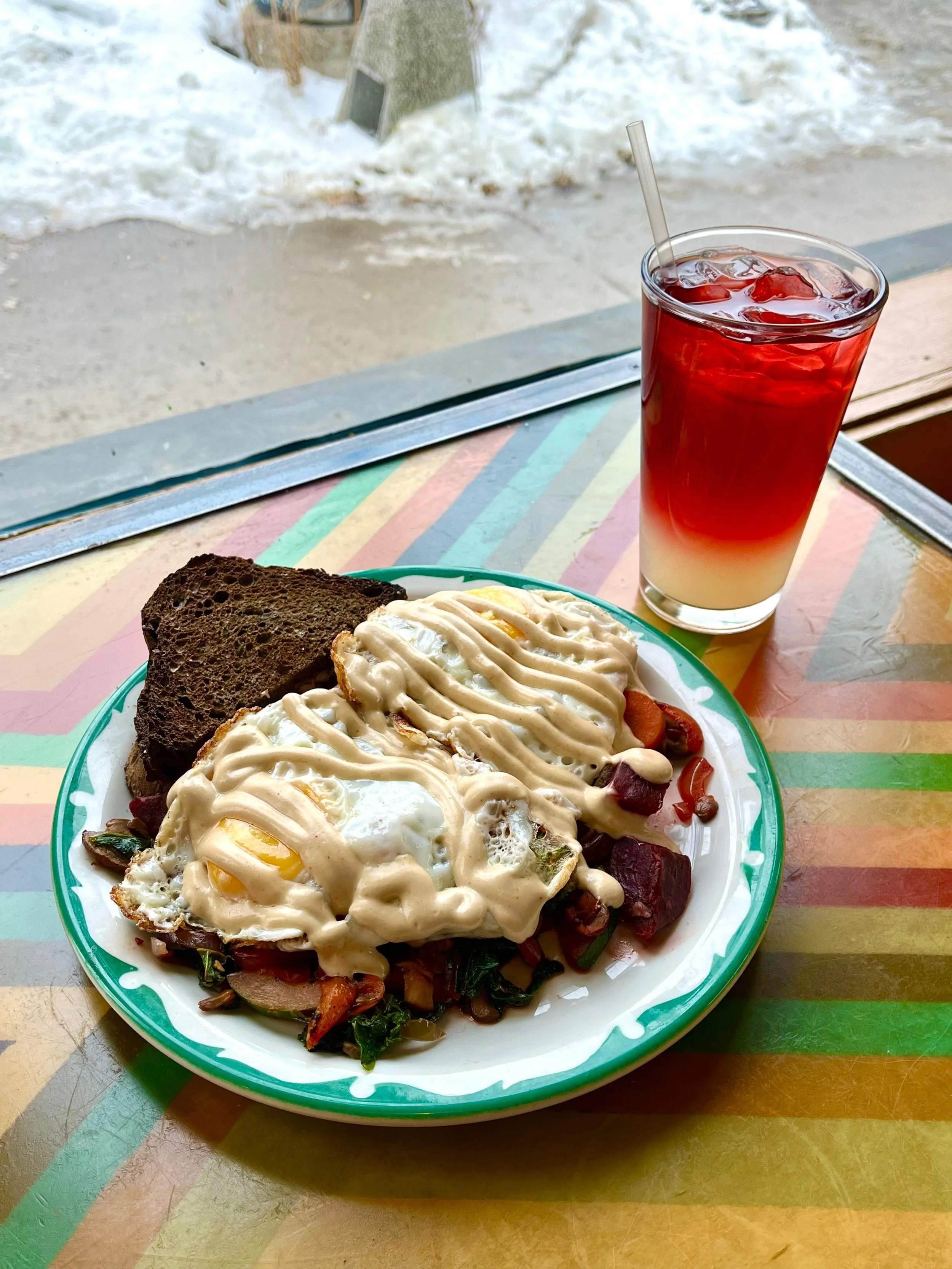
As ICE agents patrolled the streets of Minneapolis throughout January, the Modern Times Cafe began offering free and pay-what-you-can meals to anyone who needed them.
“Minnesotans aren't people to ask for help very easily,” Dylan admitted. But the free meals were working. “We were offering comfort…helping people who were struggling economically. And [it] also gave my staff more value in coming to work instead of just saying ‘I’m going to make $200.’ They were doing something bigger and helping people.”
A gamble on kindness and humanity
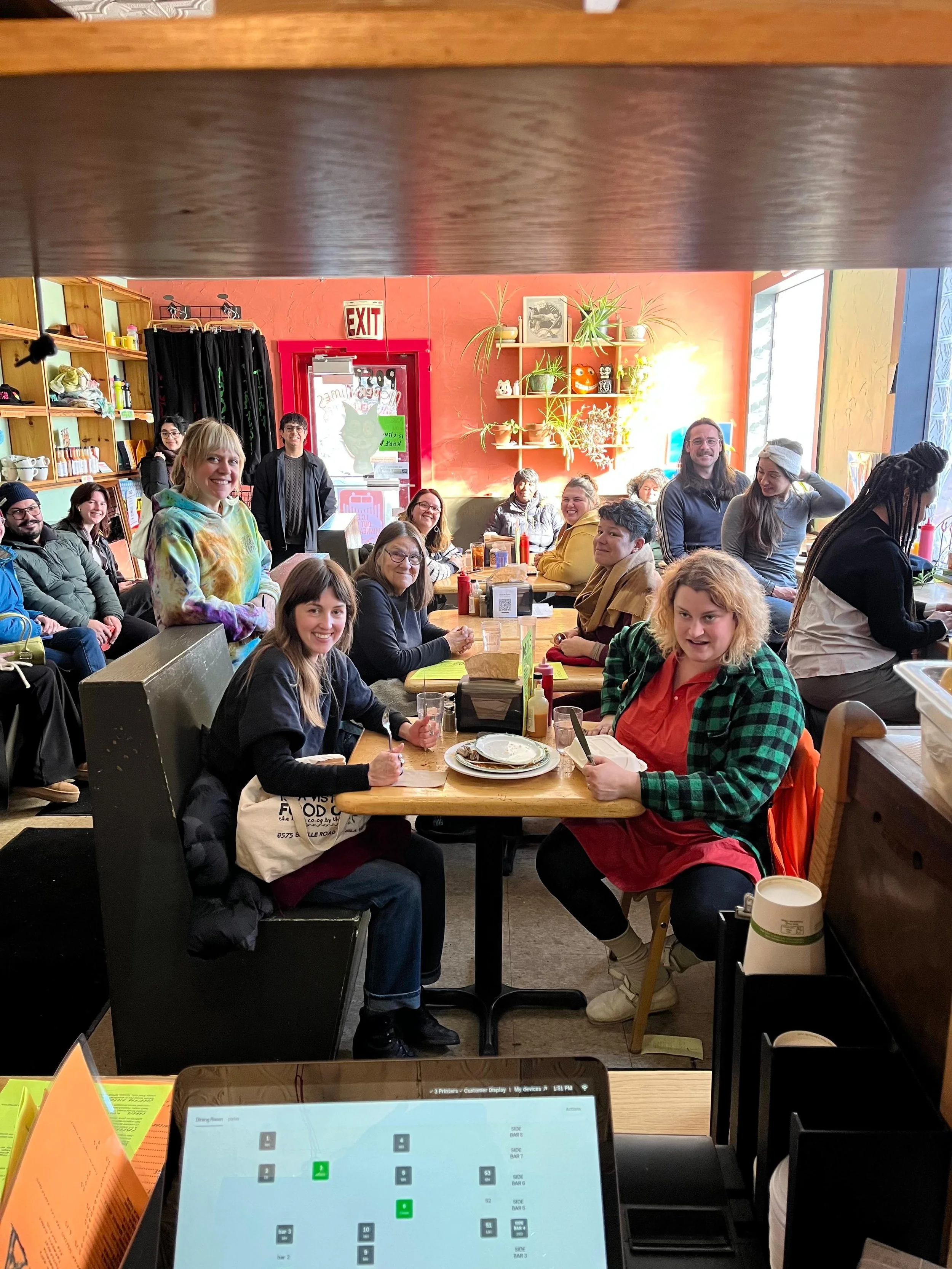
But as he grappled with the murder of Pretti and the escalating violence by federal agents across the city, Dylan felt like he needed to make a bigger change—a “gamble on kindness and humanity.” It seemed inconceivable to continue operating the restaurant as normal.
Modern Times closed the Sunday after Pretti's murder and Dylan started to put the wheels in motion for a big shift. He knew that it wasn’t his sole decision to make. He called an all-staff meeting, and shared a plan with his team. He told them, “I can't make this decision for you. For this to work, everyone has to be on board.”
The plan Dylan outlined was:
Shift the restaurant to become 100% free and donation-based.
Disrupt the business’s previous form of paying federal and state taxes, as an act of peaceful resistance against the state-funded violence and occupation.
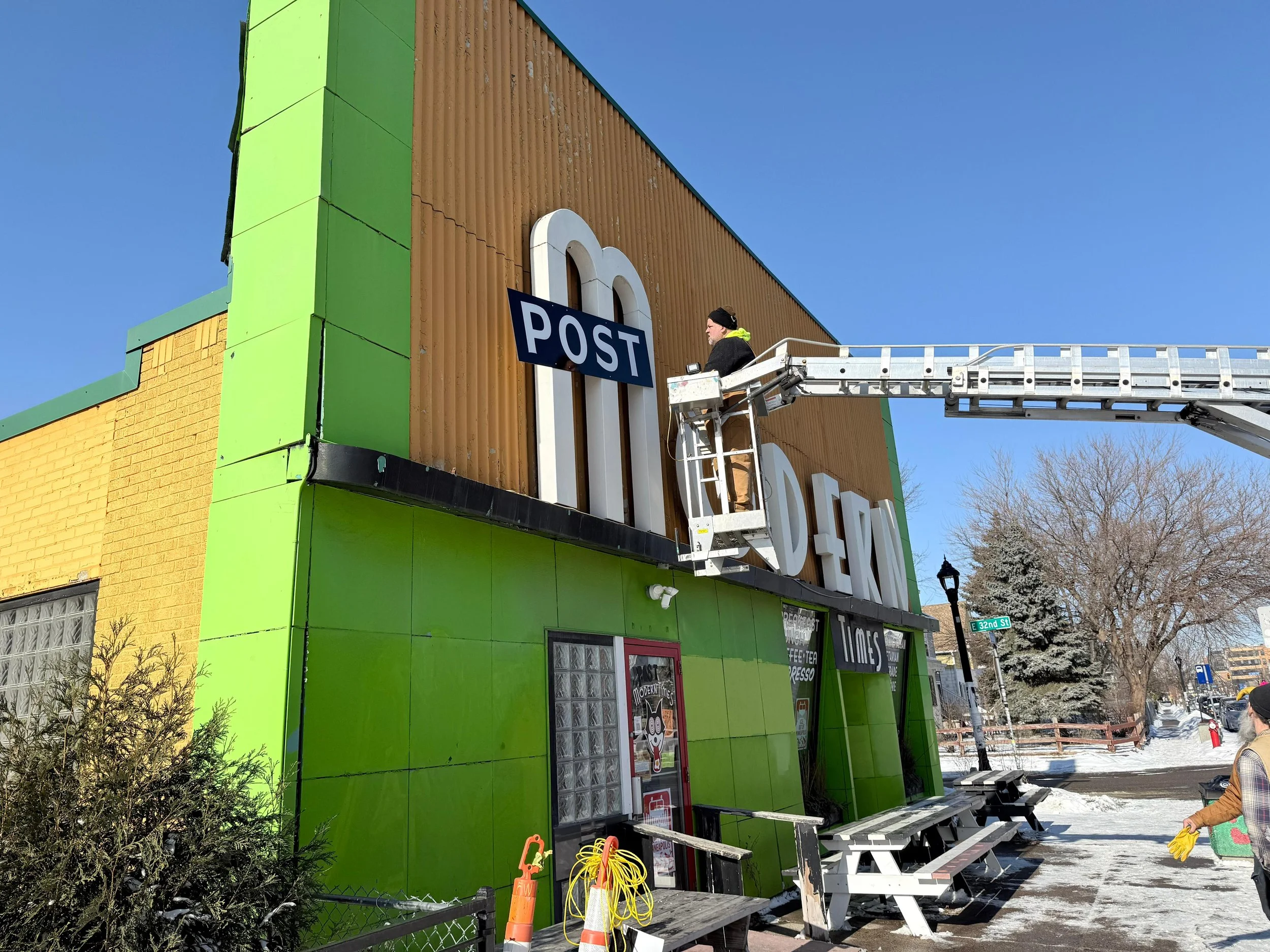
Rename the restaurant the Post Modern Times Cafe, and start incorporating the new name as a nonprofit arm of the restaurant.
Accept donations from the community to continue operating.
Any employees interested in helping out can volunteer; others can use their earned sick-and-safe time—a Minnesota paid-leave benefit. Across the board, Dylan would commit to ensuring that no team member would experience financial hardship as a result of the shift.
The team talked through a few questions, and then resoundingly backed the plan. The restaurant would re-open the next day as the donation-powered, volunteer-staffed, Post Modern Times Cafe.
That night, Dylan confessed that he was nervous. “I can’t remember feeling nervous in 20 years,” he said.
He didn’t know how it would go, but he knew it was time to make a radical change and bring awareness to what the government was doing, how it was impacting small businesses, and how—if his gamble on kindness and humanity paid off—a local cafe could be propelled forward by the support of its community. Between business as usual and business for democracy, there is a chasm that bravery must overcome.
Dylan was overwhelmed by what would happen next. Within a few days of sharing his story on Instagram, they received an abundance of donations, not only from people across the neighborhood but also across the country. Over 600,000 people had already what Dylan and his team were doing on the corner of Chicago Avenue and East 32nd Street, and the number keeps growing. Today, the Cafe's hours are slightly shorter, and the menu is more limited, but the Post Modern Times Cafe stands as an example of a pro-democracy small business and community enterprise.
Lessons for pro-democracy businesses
Dylan understands that shifting to a free and donation-based model, with volunteer staff, is not one that everyone can or should follow. There are multiple ways to be a pro-democracy business. But the story of Post Modern Times Cafe does offer lessons and wisdom for other business leaders seeking to hold the line against authoritarianism:
Identify ways that you can divest from harm: Don’t forget the power that businesses have through the different streams of funds they pay. Think about where your business may have power to withhold funds in ways that can make a difference – whether that is unsubscribing, shifting to new vendors, or making a more complex structural shift, such as (Post) Modern Times Cafe has done. Seek legal counsel on how to navigate with integrity any complexities that may be involved. And then activate the divestment lever that is right for you and your team.
Take the risk to guarantee your team’s financial security: If you feel there is a shift to be made away from business as usual, and you don’t know yet how your team’s rent and bills will be paid if you make this shift, take a leap. In Dylan’s case, some employees said they had to get paid to make ends meet, and Dylan told them, “We’ll figure it out. I promise you that you will not make any less money.” What Dylan did was be honest with his team and assure them they would figure it out together. In our research, we have seen time and again that community-rooted enterprises can trust the mutual aid capacity of their communities. Even if you don’t yet know where the financial security will come from, making the shift can be the catalyst that inspires others to join and resource you. When leadership provides a verbal guarantee, team members can relax and get creative alongside their community stakeholders.
Leverage your organization’s greatest assets: One source of confidence in making the transition to be fully donation-based was the community support around the Modern Times Cafe: locals who had become regular patrons, a large following online, and widespread support from the community. Making a choice to be brave is easier when you know there’s a community behind you.
Use your intuition as a compass for leadership: In the face of fear and nervousness about what would come next, Dylan returned to his principle of leadership rooted in intuition and values: “A lot of my business skills are self-taught and mostly is a lot of intuition. I follow my gut a lot and… [it] never strays me to the wrong path. …I've never made a decision in business that was about doing something good and regretted it.”
Resist the inevitable pull of business as usual: Dylan’s advice for other business leaders? “Don't be afraid to stand up. Don't be afraid to take chances or look at things from a different lens,” he said. “Small businesses…I think people set it up and put their heads down. And I think that’s hard for a lot of people to change.” It takes courage to see things through a different lens and to accept that the old normal will not return.
Being ready
As we’ve discussed in previous letters, our society is more resilient in upholding democratic norms when we share power in our economy. This applies at the level of each individual business as well. What we’ve seen in our research with Beloved Economies is businesses that operate in ways that share decision-making power and model ways of beloved work are exceptionally resilient in times of crisis and achieve what we call “breakout innovation.”
As a small business leader, Dylan puts his team’s needs on the same level as his own. “I try to make decisions that are good for everyone, and oftentimes above my own,” Dylan said. “Making sure that my staff is taken care of is the foundation of a successful business.” Without this approach of leading from behind and creating collective decision-making structures, the Cafe would likely not have been able to do what it did. A business’s ability to be brave in crisis depends upon planting the seeds of collective power and shared ownership every day.
Post Modern Times has always challenged toxic norms in its industry. “The restaurant economy was built on abusing illegal immigrant labor at a low cost,” Dylan said. But this legacy of exploitation has inspired an alternative blueprint for leading his restaurant: gender equality in back-of-house, all female-bodied managers, and wages that have allowed people to purchase homes in the neighborhood. Every industry has a history of “business as usual” practices. Those practices can serve as a starting point for a moral and entrepreneurial imagination: what would it look like to do things differently?
“With chaos is change,” Dylan shared in our interview. The chaos has brought immense suffering and tragedy. May it also spark lasting change toward justice and democracy.
Want to go deeper? Read the transcript or listen to our conversation with Dylan here. If you want to help out, the best way is to donate to Post Modern Times Cafe’s non-profit arm, click here for updates and ways to support.